
Wilson’s Blade 100 and Clash 100 are two of their top selling tennis rackets as they are arm friendly rackets that offer good power and spin, which makes them very popular with intermediate and senior tennis players.
In this article, I will look at the specs of these two rackets to see how they compare to each other.
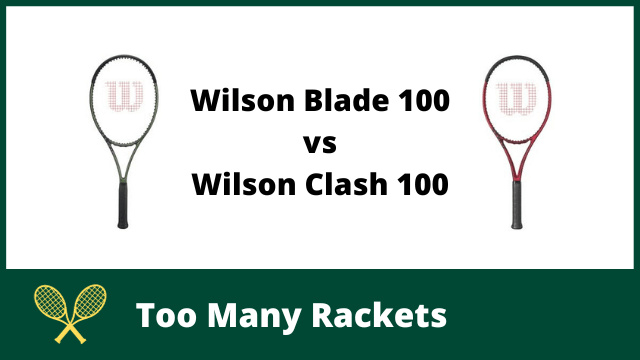
Blade 100 vs Clash 100 – Rackets Specs Comparison
Main Differences: The Blade 100 has a higher strung weight (11.2oz vs 11.0oz), a higher swing weight (318 vs 313), a less head light balance (4 pts HL vs 7 pts HL), a higher frame stiffness rating (64 vs 57), and a thinner beam width (22.5mm vs 24.5mm).
Similarities: Both rackets have the same head size (100in), racket length (27in), and string pattern (16 x 19).
| Specs: | Blade 100 | Clash 100 |
|---|---|---|
| Version: | V8 | V2 |
| Design: | 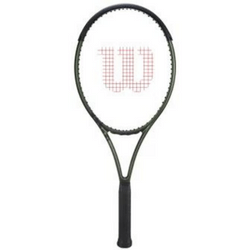 | 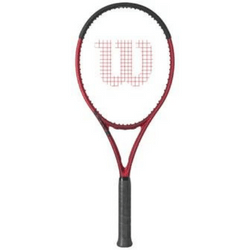 |
| Head Size: | 100in | 100in |
| Length: | 27in | 27in |
| Strung Weight: | 318g (11.2oz) | 312g (11.0oz) |
| Unstrung Weight: | 300g (10.6oz) | 295g (10.4oz) |
| Swing weight: | 318 | 313 |
| Strung Balance: | 4 pts HL | 7 pts HL |
| Stiffness Rating: | 64 | 57 |
| Power: | Low-Medium | Low-Medium |
| Player Level: | Intermediate-Advanced | Intermediate-Advanced |
| Beam Width: | 22.5mm | 24.5mm |
| Colors: | Green | Red |
| String Pattern: | 16 x 19 | 16 x 19 |
| Main Skips: | 8T,8H | 7T,9T,7H,9H |
| Grip Type: | Wilson Pro Performance | Wilson Pro Performance |
Head to Head
The Blade 100 is the better option in terms of control, with the Clash 100 being the better option in terms of power, spin, and arm friendliness.
If you are a flat hitter then you will likely prefer the Blade 100 as it has a lower ball trajectory and less spin.
| H2H | Blade 100 | Clash 100 |
|---|---|---|
| Power | – |  |
| Control |  | – |
| Spin | – | |
| Arm Friendliness | – | |
Player Recommendations
In my opinion, these rackets will best suit an intermediate to advanced tennis player, with the Blade 100 being the better option for more advanced players as the Clash 100 is more focused on power and spin rather than control.
Beginners will find these rackets too heavy and unforgiving, so beginners will be better off going for the lighter 100L versions of these rackets.
| Player Level | Blade 100 | Clash 100 |
|---|---|---|
| Beginner |  | |
| Intermediate |  | |
| Advanced | | |
Where can you buy these tennis rackets?
The rackets are for sale in most good online tennis shops and on the official Wilson website.